In short
- First recorded in 1298, the chapel passed to the City of Vienna in 1316.
- Enter through the gate of the Old Town Hall at Wipplingerstraße 6.
- Doors open twenty minutes before the start, and seats inside your category are first come, first served.
A chapel for the town hall
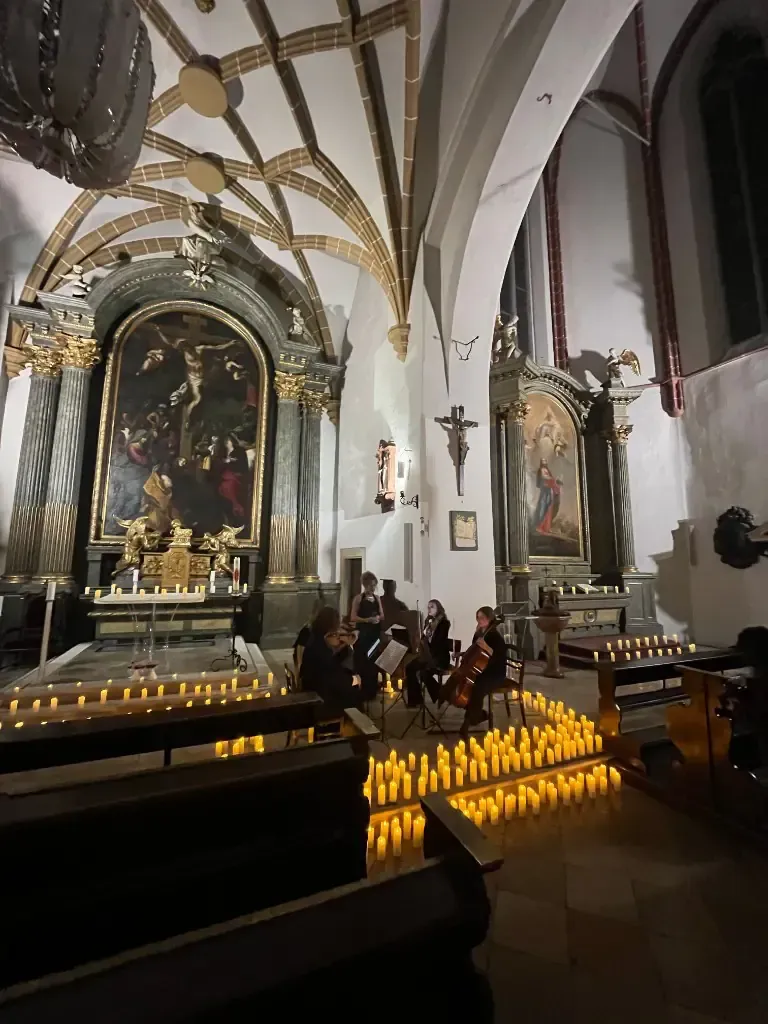
St. Salvator is first recorded in 1298 as the private chapel of the brothers Otto and Haimo, on the upper floor of their town palace. Palace and chapel passed to the City of Vienna in 1316, and for five centuries this was the chapel of the town hall.
In 1871 the city gave the church to the Old Catholic congregation; today it is the bishop’s church of the Old Catholic Church of Austria.
What to look for
Inside, a Gothic rib vault over gilded Baroque altars. Outside, on the Salvatorgasse, the portal of about 1520 is one of the few Renaissance monuments left in Vienna.
Your seat
There are no numbered seats: you choose a seat inside your category, first come, first served, and doors open twenty minutes before the start. Category I is the front rows, directly before the musicians; Category II the middle of the nave; Category III the side aisles and the back rows.
Before you go
There is no dress code, but the chapel can be cool even in summer, so bring a layer. Children are welcome; babies under one year cannot be admitted. Photographs are welcome before and after the concert, not during it.
Finding the entrance
Go through the gate of the Altes Rathaus, the Old Town Hall, at Wipplingerstraße 6. Schwedenplatz (U1, U4) and Stephansplatz (U1, U3) are the nearest underground stations. This is not the Salvatorsaal in the sixth district, nor the Bank Austria Salon at Wipplingerstraße 8.
Sources: The organiser’s own visitor information; the published history of the church.