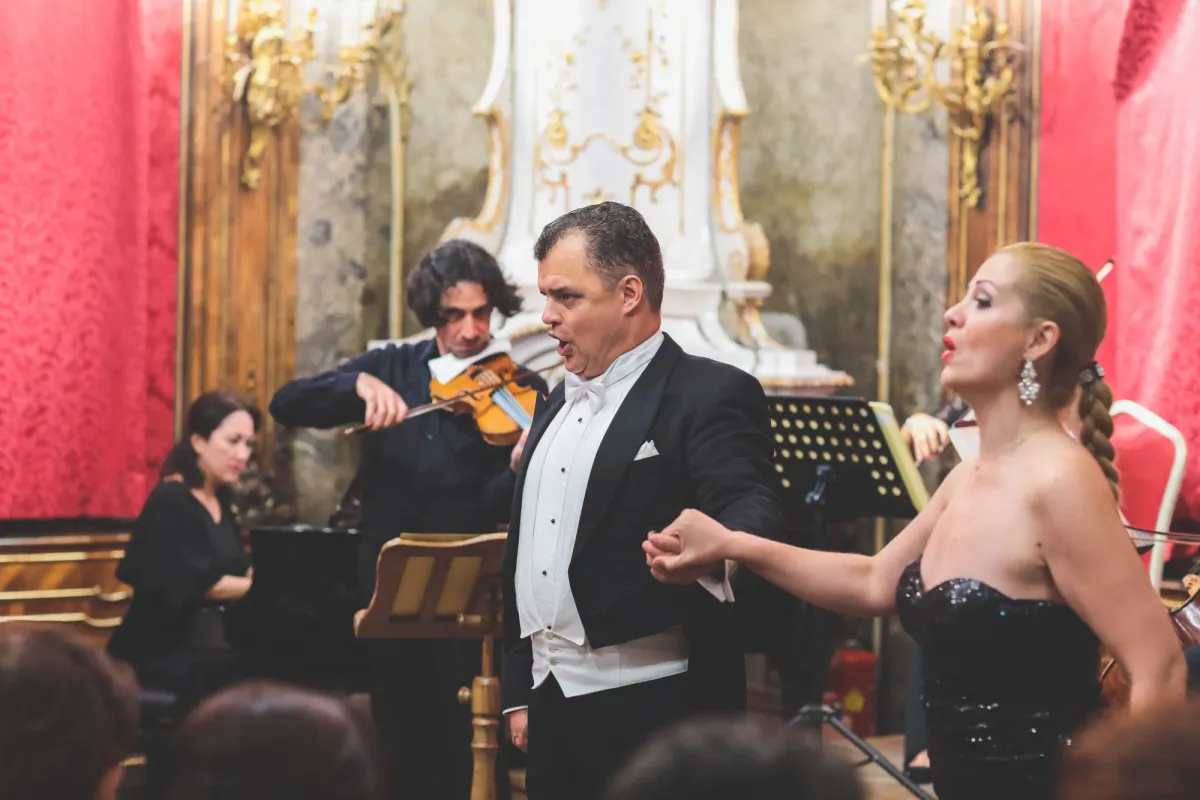
In short
- The singers step forward from the ensemble for the arias and duets; the orchestra’s leader plays the solo violin.
- A selection from the evening, as the orchestra publishes it, not the whole of it.
- Single works may change on the night.
From the programme
- Wolfgang Amadeus Mozart, 1756–1791
The Marriage of Figaro: “Non più andrai”
Le nozze di Figaro, K. 492Figaro sends the young page Cherubino off to the army.
- Antonio Vivaldi, 1678–1741
The Four Seasons
Four violin concertos printed in Amsterdam in 1725, each with a sonnet about its season. Vivaldi died in Vienna in 1741.
- Wolfgang Amadeus Mozart
The Magic Flute: the “Pa-pa-pa” duet
Die Zauberflöte, K. 620Papageno finds his Papagena at last, and the two stammer out each other’s names.
- Gaetano Donizetti, 1797–1848
The Elixir of Love: “Una furtiva lagrima”
L’elisir d’amoreThe tenor’s aria from the comic opera of 1832: a hidden tear tells Nemorino that he is loved.
- Pyotr Ilyich Tchaikovsky, 1840–1893
Serenade for Strings, the waltz
From the serenade of 1880, whose first movement Tchaikovsky called a homage to Mozart.
- Johannes Brahms, 1833–1897
Hungarian Dance No. 5
Written for piano four hands and the best known of Brahms’s twenty-one Hungarian Dances. It speeds up and slows down without warning.
- Franz Lehár, 1870–1948
The Land of Smiles: “Dein ist mein ganzes Herz”
Das Land des LächelnsThe tenor’s song from Lehár’s operetta of 1929, written for Richard Tauber.
Sources: The orchestra’s own published programme; the history of each work from the standard reference works.